
Respecting your Paces: Shaving 16min.
Dropping my half marathon time from a 1:37:36 (Big Apple Half 2024) to a 1:21:25 at Project 13.1 2026 was the result of a strict game plan, consistency and disciplined execution.
The course consists of loops around a lake at Rockland Lake State Park and is built specifically for runners aiming to break 90 minutes in a half marathon. It runs in two waves:
7:00 AM for those targeting 1:16:45 or faster
8:25 AM for those aiming for 1:17:00 or slower.
I lined up in wave two.
My teammate, Michael Bravo (pictured in the middle below), ran in the first wave. After his race, he gave me one piece of advice: respect your paces. That sank in from the get-go.
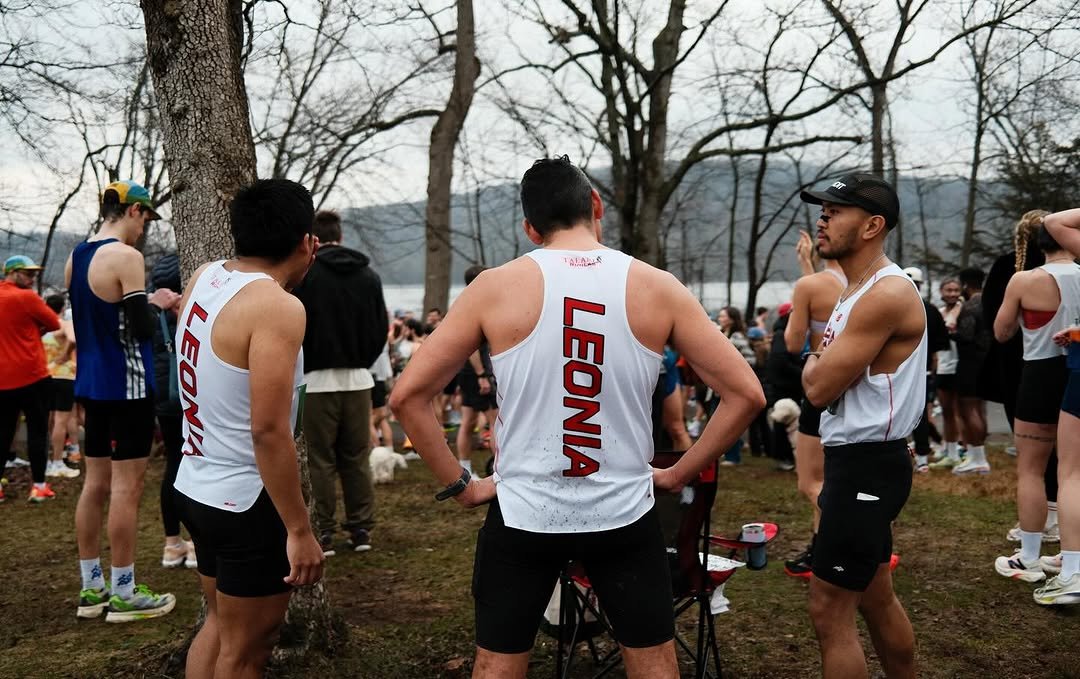
The Pre-Game Huddle.
Photo Credit: Paul Logrono
Here is the post-game breakdown.
Practice: The Fitness Indicators
The data showed an 81-82 minute finish was already locked in. These are the workouts that served as massive confidence boosters:
6 x 1 Mile at Tempo
(6:10, 6:08, 6:10, 6:09, 6:07, 6:03)
Hitting these consistently proved my lactate threshold was exactly where it needed to be.2 x 4 Mile with 5s Cutdowns
Dropping the pace by 5 seconds every mile starting at 6:30/mi showed I could clear lactate and shift gears on tired legs.The Michigan
Mixing hard track intervals with tempo miles tested my ability to manage lactate. Surging on the fast intervals and recovering right at goal half-marathon pace simulated late-race fatigue, while closing the final 400m rep at a 4:35 pace confirmed the finishing speed was there. (5:46, 6:14, 5:50, 6:09, 5:29, 6:09, 4:35)
The Taper: Shedding Fatigue
You don't build fitness the week before a race. That final stretch is not about making gains; it is strictly about staying sharp and recovering well so your body can absorb the training block.
Looking at my Garmin telemetry from race week (March 14-20), the focus was purely on restoration. My Sleep Score consistently tracked in the high 70s to upper 80s, keeping my daily Body Battery recharge steady and predictable. Those flashy anchor workouts only work if you execute this daily grind: getting your easy aerobic runs in, metabolizing fat on Sunday long runs, cooking your meals at home, hitting your functional single-leg lifts, and taking care of your hips. By prioritizing sleep and that foundational maintenance, I stepped to the start line without carrying any residual dead weight.
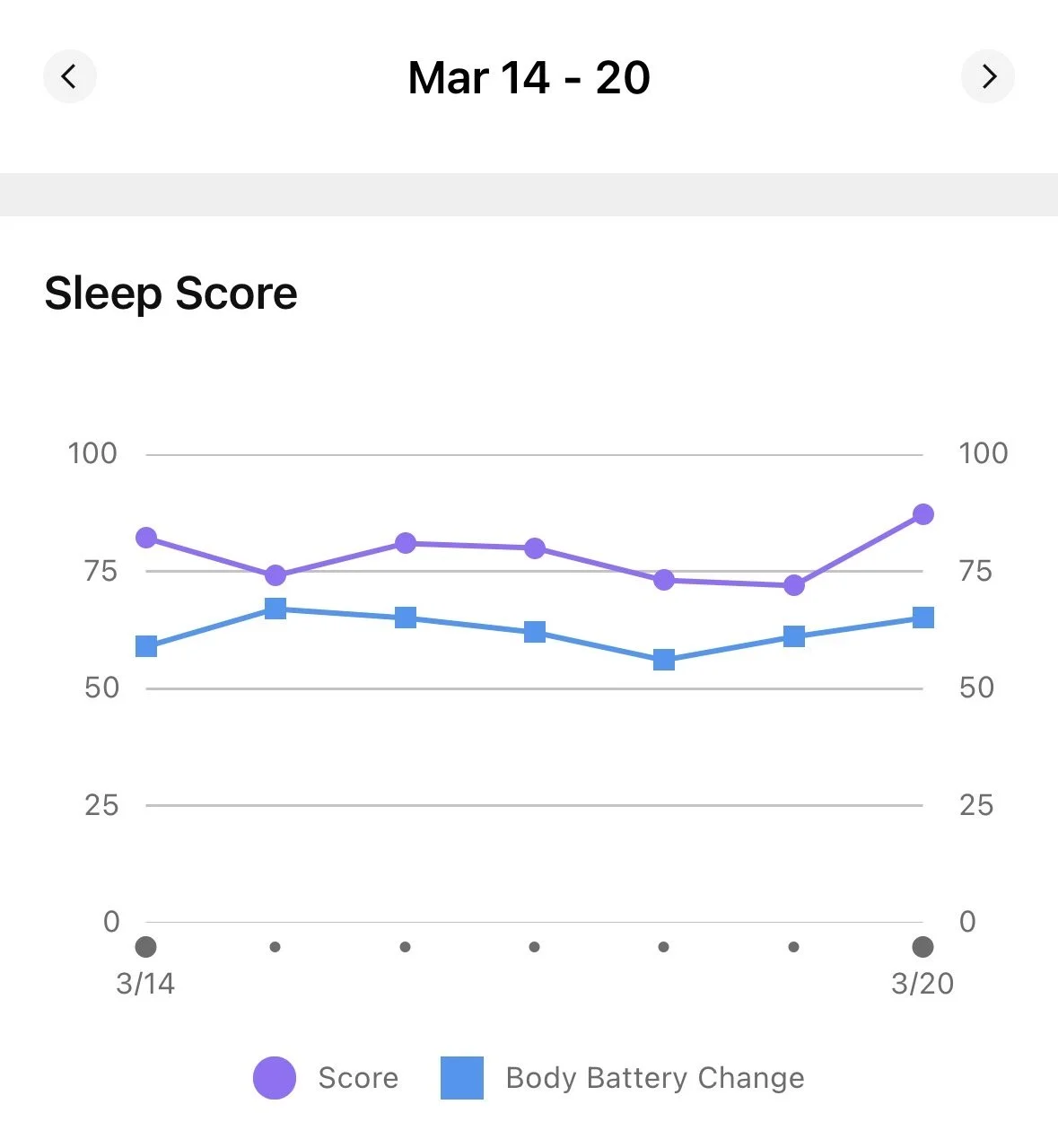
Pre-race nerves are a given, but as a data nerd, I trust the numbers. Training is about working smarter, not just harder—the work spoke for itself.
The Game Plan
My coach mapped out a strict negative split strategy to manage early adrenaline:
Miles 1-4: 6:20/mi
Miles 5-8: 6:15/mi
Miles 9-13.1: 6:05-6:10/mi
Executing the Splits
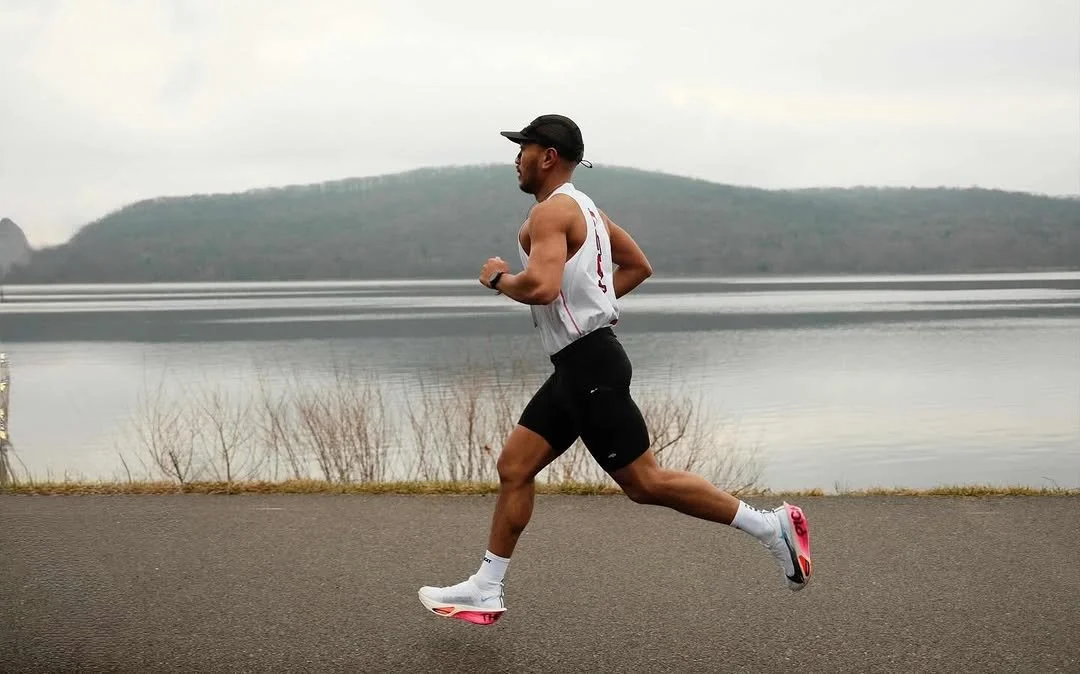
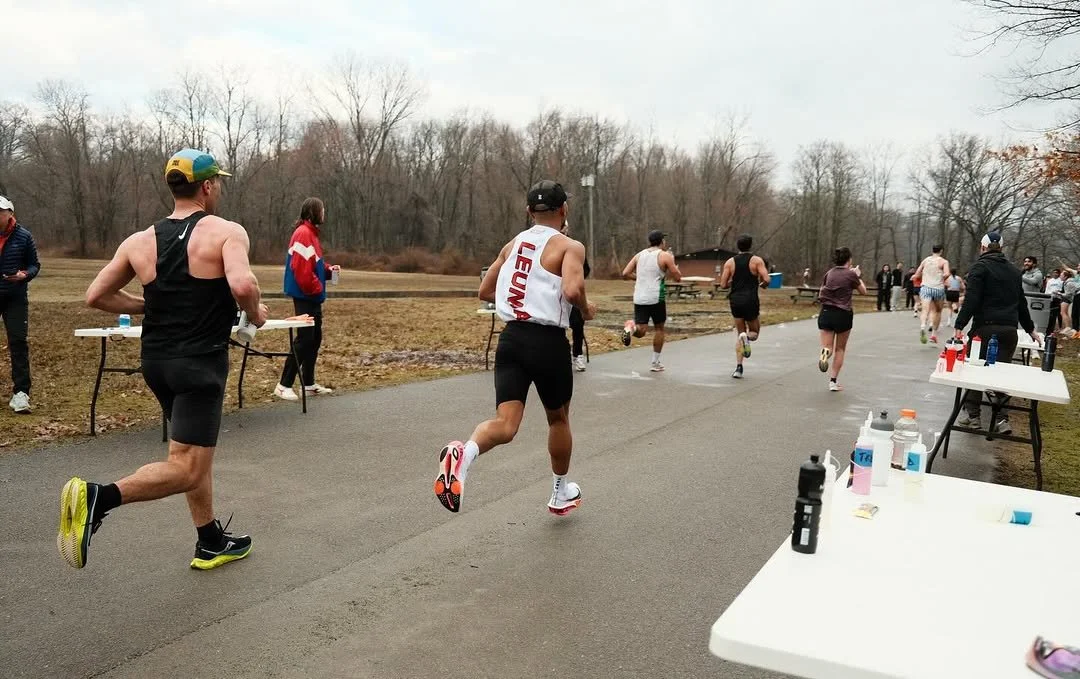
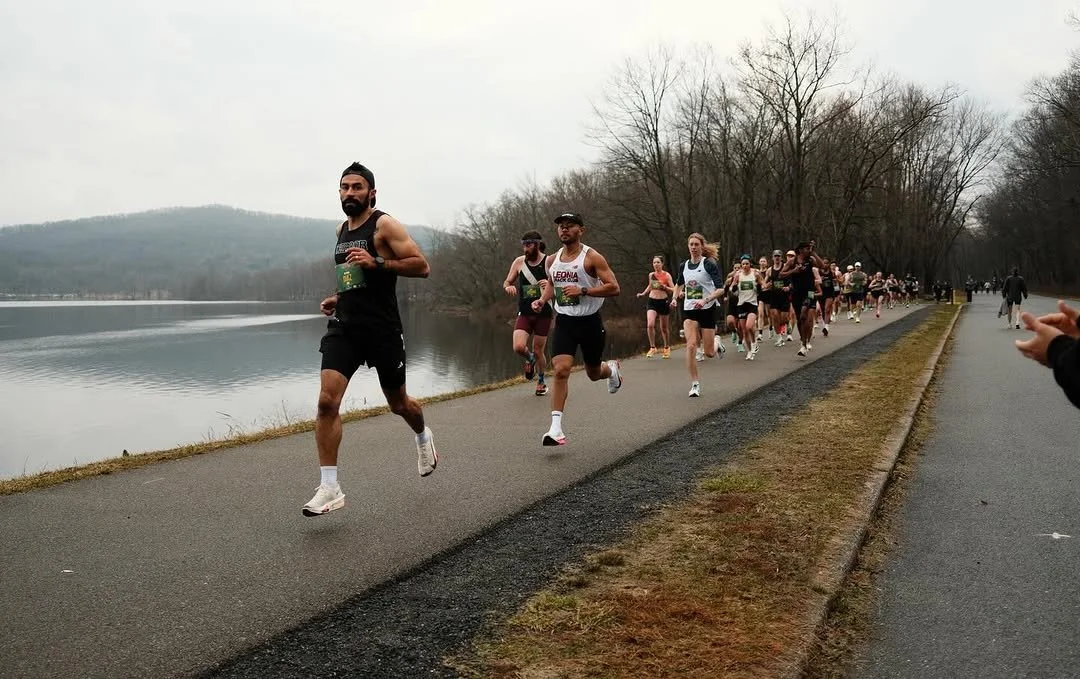
“Let’s go Laurence! Be Patient”
First Quarter (Miles 1-4 | 6:16/mi Avg): The objective was restraint. I kept the effort completely under control and just watched the watch.
Second Quarter (Miles 5-8 | 6:11/mi Avg): Time to squeeze the pace. Take second gel. Thanks to the cutdown workouts, shifting down felt entirely manageable.
The Closing Half (Miles 9-13.1 | 6:01/mi Avg): This is where the race started. Take last gel. Had to dig at mile 11. I emptied the tank, closing the final 5.25 miles at a 6:01 average pace.
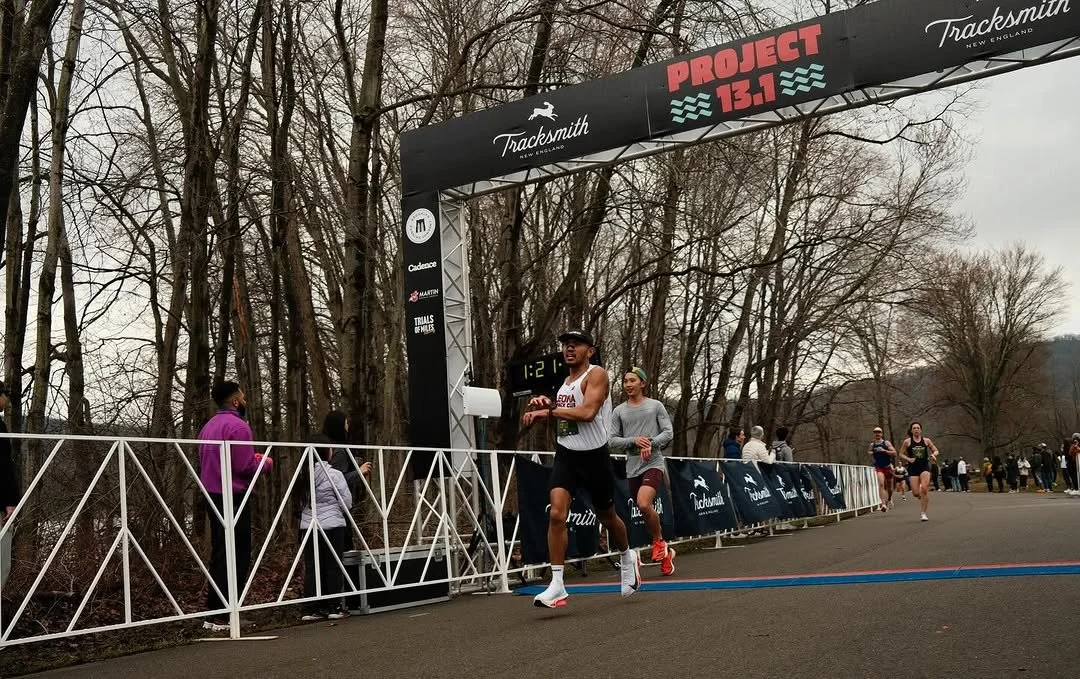
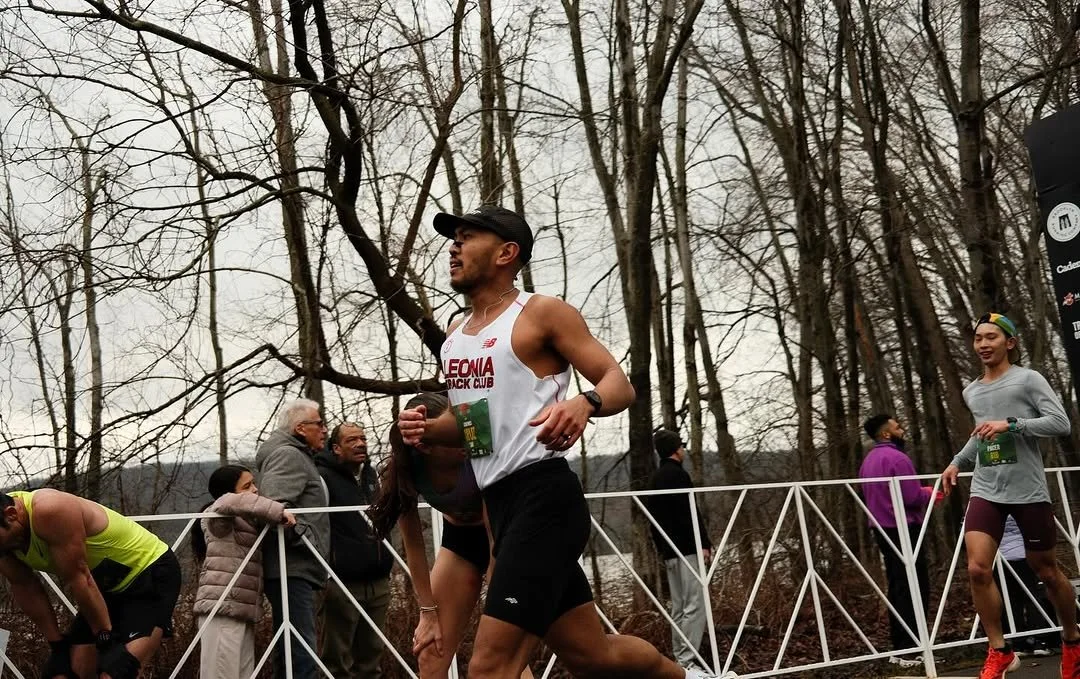

Photo Credit: Justin Sorensen
Reviewing the Tape: Heart Rate & Power
The telemetry completely validates the strategy.
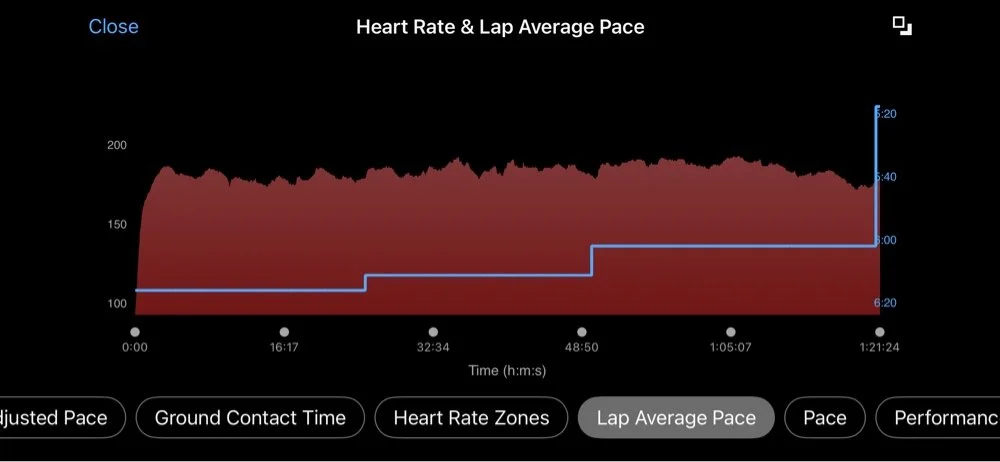
Graphing lap average pace over heart rate shows a literal step-down in pace across the three blocks, ending with a sprint spike at the finish line. Crucially, the heart rate curve stays remarkably flat throughout these pace drops. Even accounting for optical wrist sensor inaccuracies (183 bpm avg / 193 bpm max), conserving energy early preserved the aerobic capacity to close hard.
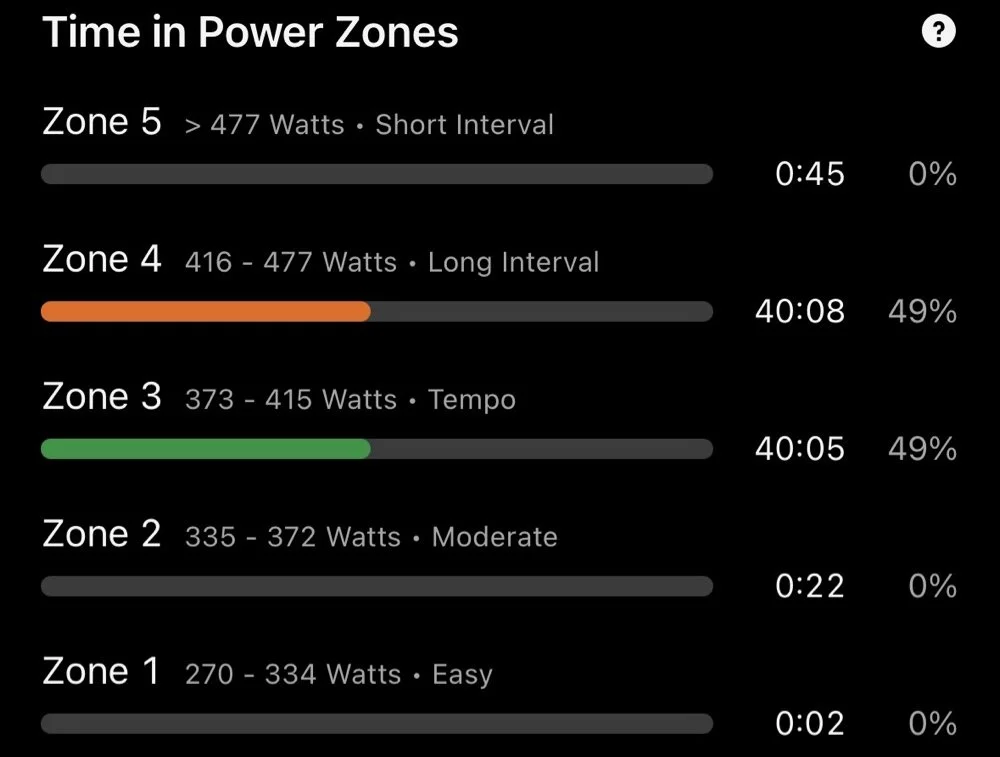
Looking at running power, the effort was split down the middle:
Zone 3 (Tempo): 40:05 (49% of the race)
Zone 4 (Threshold): 40:08 (49% of the race)
Spending exactly half the race keeping the power capped in Zone 3 is exactly what allowed me to ride the Zone 4 redline for the entire back half.
On to the next!
I’ll say it again: I couldn’t have had a better race. Sure, I wanted to break 80 but the biggest lesson here is prioritizing execution over adrenaline. It is incredibly easy to get caught up in the environment, overcook the early miles, and inevitably tire yourself out before the final 5K. Respecting the paces requires patience. It's an area where I've actively grown—learning to work smarter, not just harder, both out on the course and as a parent. The discipline translates, and the results follow.
Intentional racing.
With a 1:21:25 on the books, the next target is sub-80. Brick by brick.
Big thanks to coach Hector Matos and the Leonia Track Club. Continuing to stack fitness is what makes this running thing very fun.